If You Have a Knot Between Your Shoulder Blades That Never Goes Away, Stop Massaging It
Neurologists reveal why digging tennis balls and massage guns into your upper back triggers "muscle guarding" and makes the knot tighter, and the simple 26-degree neck protocol that turns it off permanently.

You know the exact spot.
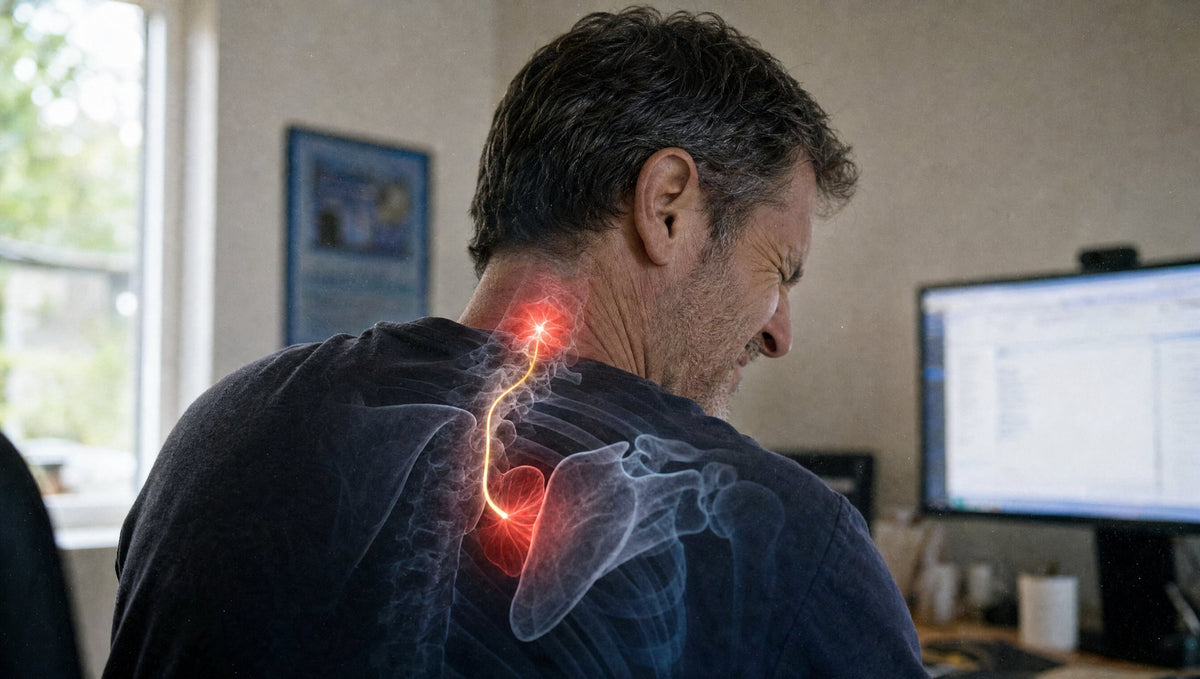
That deep, gnawing knot tucked right against the inner bone of your shoulder blade. It is there from the moment you wake up. It starts burning after forty-five minutes at your computer. And on bad days, it sends a dull ache or strange tingling sensation creeping down into your arm.
If you have lived with that knot for months or years, you have probably noticed something deeply frustrating about it:
It doesn't behave like a normal sore muscle.
Think about what happens when your calves or hamstrings get tight after a long walk or workout. You stretch them out, you rub the tight spot, and the muscle fibers loosen up. They feel better.
This shoulder blade knot does the exact opposite.
It fights back.
You lean into a doorway to press on it. You roll around on a hard lacrosse ball against the drywall. You buy an expensive massage gun and hammer the spot on high speed, or you beg your partner to dig their elbow directly into the center of the knot.
And for about twenty minutes, it feels like it is working. The area goes slightly numb, the burning cools down, and you think you finally conquered it.
Then, two hours later, the knot clamps right back down. Only now, it feels bruised, tender to the touch, and even tighter than it was before you touched it.
If this sounds familiar, you are not alone. And more importantly, you are not doing anything wrong.
According to leading spine specialists, the reason you cannot get rid of that knot has nothing to do with how hard you rub it.
You have been treating the wrong body part entirely.

The "Smoke Alarm" Mistake: Why Digging Into The Knot Makes It Worse
"Over 85% of the patients who walk into my clinic with a stubborn knot between your shoulder blades have spent years rubbing, rolling, and pounding their upper backs," explains Dr. Alexander Brown, a prominent New York spine and neck specialist with over twenty years of clinical experience.
"The very first thing I tell them to do is put the massage gun away. That knot is not a back muscle problem. In fact, that knot is not a problem at all. It is an emergency protective shield."
To understand why traditional massage fails, you have to look at the basic physics of the human spine.
Your head weighs roughly ten to twelve pounds, about the same as a heavy bowling ball. When your posture is upright, that weight is distributed evenly across your cervical spine.
Every hour spent looking down at your phone, working on a laptop, or slouching behind the wheel pulls your head forward. And for every single inch your head leans forward, it adds ten extra pounds of pressure on your neck.
When you slouch over a desk or look down at a smartphone, your cervical spine is forced to support nearly fifty pounds of continuous force.
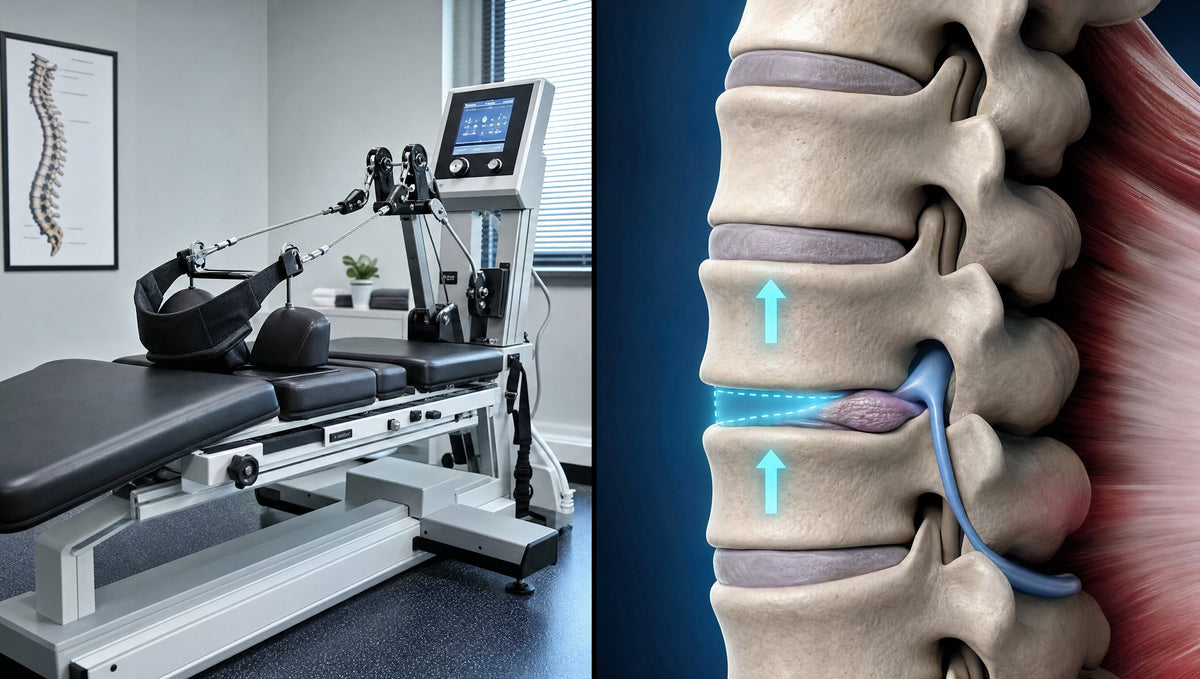
Over months and years, that relentless pressure squishes the soft, shock-absorbing discs between your neck vertebrae. Eventually, a disc is pushed out of its natural alignment, bulging outward and pinching a nearby nerve root.
And here is the critical connection most people never learn:
That nerve doesn't stay in your neck.
The nerves that control that exact spot don't start in your back. They originate up in your neck, travel across your upper back, and end right at the inside edge of your shoulder blade.
Because the nerve travels downstream, your brain perceives the distress signal at the very end of the line, right behind your shoulder blade. Even though the mechanical pinch is happening in your neck, the burning ache shows up in your back.
When your brain senses that a nerve in your spine is being crushed, it triggers an emergency reflex known in neurology as "muscle guarding."
To stop your spine from moving and prevent further damage to the trapped nerve, your brain orders the surrounding muscle fibers to lock down into a permanent, rock-hard cramp. It acts like an internal neck brace.
That protective cramp is the stubborn knot you keep trying to rub out.
"Think of that knot as a loud smoke alarm. The fire is up in your neck discs, but the alarm is sounding between your shoulder blades. When you grind a lacrosse ball or a high-speed massage gun into that knot, your nervous system panics. It interprets that pounding as an attack on an already injured nerve, so it orders the muscle to clamp down even tighter to protect it. You are trying to silence the alarm with a hammer while the fire keeps burning."- Dr. Alexander Brown, MD

How Spine Clinics Silence The Alarm At The Source
Once you understand that the knot is a protective reaction to a trapped nerve, the path to permanent relief becomes surprisingly simple:
You have to take the mechanical pressure off the nerve in your neck.
When you physically open up the space between the cervical vertebrae, the bulging disc settles back into place. The trapped nerve is finally freed.
The moment your brain senses that the nerve is no longer being crushed, the emergency alarm turns off. The protective muscle guarding reflex releases, and that rock-hard knot behind your shoulder blade melts away on its own.
For decades, the only way to achieve this was inside specialized spine and physical therapy clinics using massive mechanical traction beds.
The protocol is remarkably effective. But for most everyday sufferers, it comes with a massive barrier: the cost.
A standard clinical treatment plan requires two to three visits every week for six weeks. At $100 to $150 per session, the out-of-pocket cost quickly climbs to $2,500 or $3,000. For millions of hardworking families, spending thousands of dollars on recurring clinic appointments simply isn't an option.
That realization led Dr. Alexander Brown and a team of biomedical engineers to ask a straightforward question:
What if you could package the exact four-part clinical decompression protocol used in high-end spine clinics into an affordable device patients could use in their own beds?
After two years of engineering and more than $178,000 in laboratory testing, they developed the Hugterra Massager.
The 4-In-1 Breakthrough That Does What Ordinary Massagers Can't
The Hugterra Massager looks nothing like traditional gadgets. Instead of a handheld gadget you have to awkwardly hold, Hugterra is an at-home cervical decompression device you lie back on for fifteen minutes.
And here is the detail that catches most people off guard:
You don't put it on your shoulder blade where the pain is. You place it right under your neck, where the nerve is actually trapped.
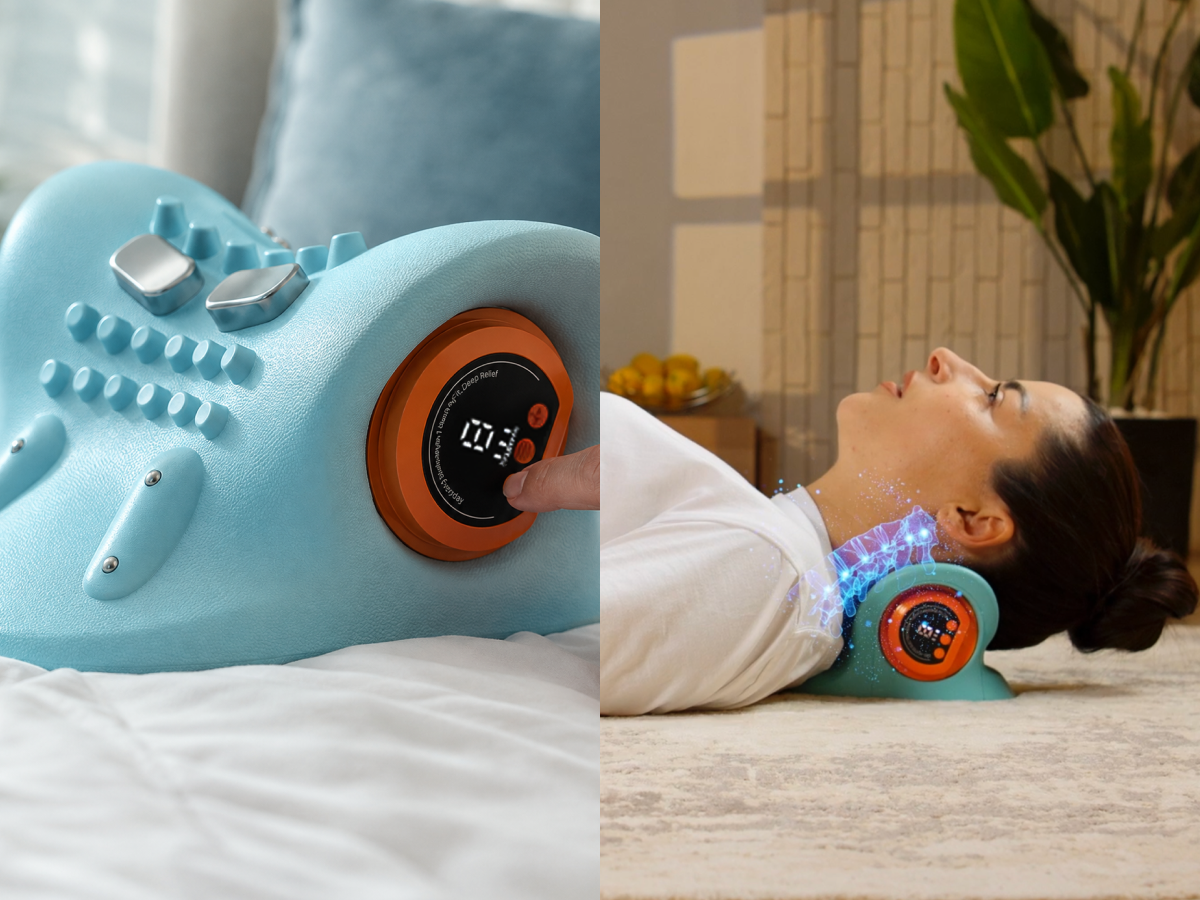
While you lie back comfortably for fifteen minutes, Hugterra provides four clinical therapies simultaneously:
1. 26-Degree Cervical Decompression
Hugterra arches your neck at the clinically proven 26-degree angle that matches your spine's natural curve. It gently lifts your vertebrae apart, expanding the compressed disc spaces and taking the crushing mechanical weight off the trapped nerve root.
2. Targeted EMS Pulses to Pump Fresh Blood and Oxygen
When your neck muscles stay clenched in a cramp around the clock, they squeeze down on local blood vessels like a kinked garden hose. This starves the tissue of fresh oxygen and nutrients, while trapping painful inflammatory waste inside the muscle. Hugterra uses gentle Electrical Muscle Stimulation (EMS) micro-pulses that contract and release the deep neck muscles like miniature pumps, opening that flow and forcing fresh oxygenated blood and natural healing nutrients back into the tissue.
3. Deep Soothing Heat to Flush Inflammation
Soothing warmth penetrates deep into the neck and upper spine, dilating constricted blood vessels to flush out the acidic, inflammatory waste that causes that burning ache.
4. Deep Rhythmic Massage Nodes
Deep rhythmic massage nodes work directly on the rock-hard muscles at the base of your skull, releasing the locked-in spasms so your entire neck and upper back can finally let go.
Tested Across 37 Chiropractic Clinics on 487 Real Patients
To ensure the device delivered clinical-grade outcomes outside of an office setting, Dr. Brown's team distributed the Hugterra Massager to 37 chiropractic and physical therapy clinics across the United States.
A total of 487 patients suffering from chronic neck stiffness, compressed discs, pinched nerves, and stubborn shoulder blade knots participated in the multi-week trial.
"I spent three years hammering that knot with a massage gun. Three days on Hugterra, and it finally let go."
"I'm a mechanic. By 2 PM every workday, that spot right under my right shoulder blade felt like someone was holding a hot lighter against my back. I bought every gadget on the market. I spent over $1,400 on deep tissue massages, foam rollers, and massage guns. Every single time, the knot would loosen up for about an hour, and then clamp back down even harder.
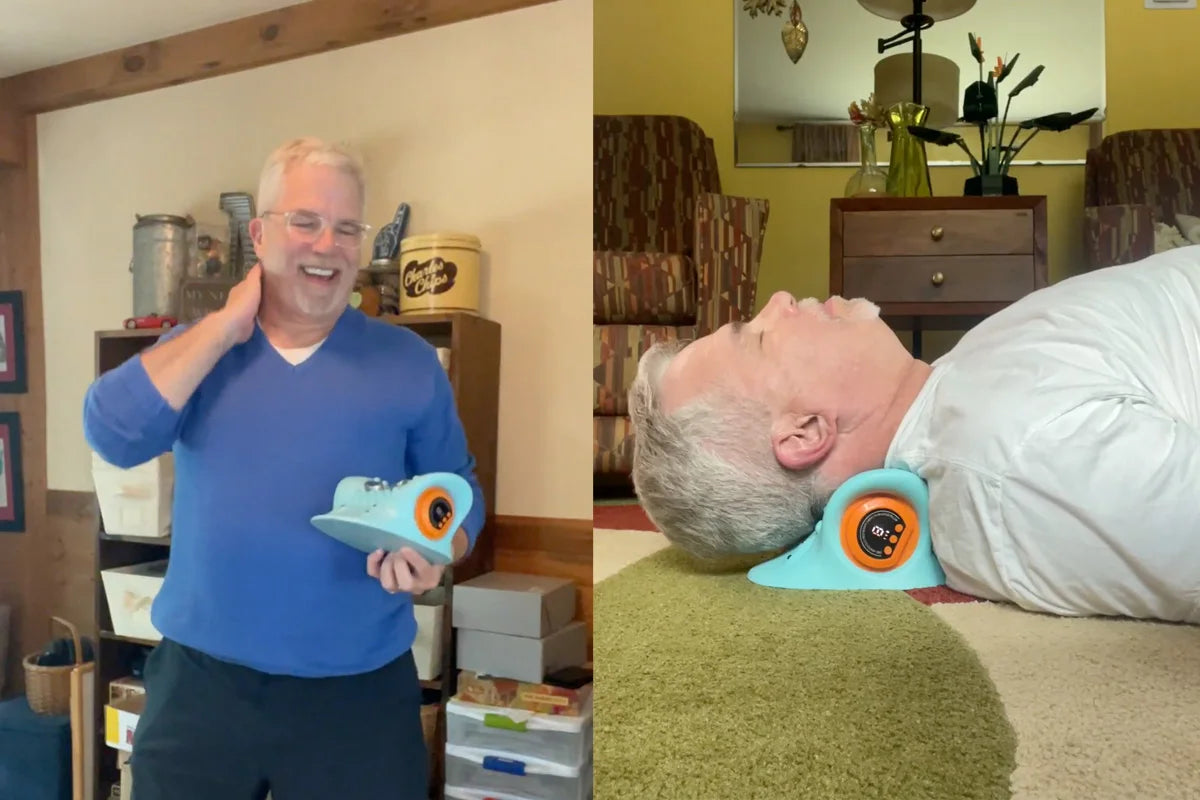
My chiropractor finally explained that the knot in my back was actually being caused by a pinched nerve up in my neck, and told me about Hugterra. When it arrived, it felt counter-intuitive because it rests under your neck, not your back. The first night I used it, I felt a gentle stretch and a strange release through my upper back that I had never felt before. By morning three, I reached behind my back to find that rock-hard knot, and for the first time in years, the lump was soft. By day ten, the knot was completely gone. I can work a full ten-hour shift and drive home without that constant burning ache."
How To Try Hugterra 100% Risk-Free for 60 Days
Conventionally, receiving all four therapies inside a clinic costs between $75 and $150 per session, adding up to nearly $3,000 for a standard treatment plan.
The Hugterra Massager regularly retails for $300, already a fraction of the cost of a single round of physical therapy.
However, as part of an ongoing national clinical awareness initiative, the manufacturer is currently offering Hugterra at a special 53% discount, bringing the price down to just $139.
That makes Hugterra more than twenty times cheaper than a clinic treatment plan, for a device you own and can use every day in the comfort of your own home.
On top of that, every order placed through the official clinical portal today includes a Free $64 Cervical Relief Kit:
- ✓Free Headache Relief Patches ($25 Value): Fast-acting transdermal patches to soothe temple throbbing.
- ✓Free Herbal Neck Patches ($20 Value): Targeted herbal patches to melt morning stiffness.
- ✓Free 14-Day Cervical Rehabilitation Guide ($19 Value): Daily expert exercises to permanently protect your spinal posture.

Claim Your Hugterra Massager + Free $64 Clinical Relief Kit
🛡️ The 60-Day "Knot-Free" Money-Back Guarantee
Dr. Brown and the Hugterra team stand behind their clinical outcomes with a completely risk-free trial: Lie back on the Hugterra Massager for fifteen minutes a day in your own bed. If that stubborn knot between your shoulder blades doesn't completely release, if your neck doesn't feel lighter and looser, or if you aren't completely thrilled with your results, simply return the device within 60 days for a prompt, no-questions-asked refund.