Top New York Spine Specialist Warns: "90% of Physical Therapy for Neck Pain Leaves the Real Problem Untouched"
Why thousands of desk workers are ditching $150 chiropractic sessions for a 15-minute at-home decompression protocol designed to release compressed cervical discs at the source.


If you have ever spent weeks driving to physical therapy clinics, lying on chiropractic adjustment tables, or paying $120 an hour for deep tissue massage, you know the cycle all too well.
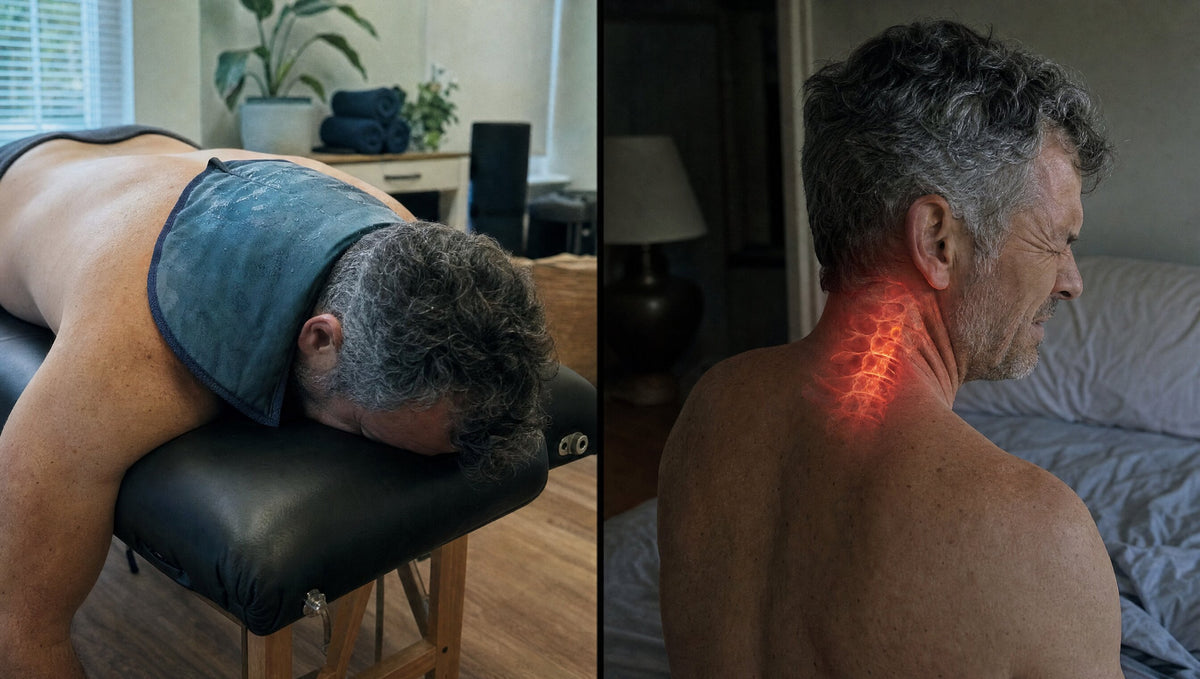
You arrive at the clinic with your neck feeling like concrete and a burning ache creeping between your shoulder blades. The therapist kneads the tight spots, puts a hot pack on your neck, maybe performs an adjustment, and gives you a sheet of stretches to do at home.
When you walk out to your car, you feel genuine relief. The tension finally drops out of your shoulders. Turning your head feels easier. You think you have finally found the answer.
Then, forty-eight hours later, you wake up and the exact same rock-hard stiffness is right back where it started.
By week four, you have burned through hundreds or even thousands of dollars in copays and out-of-pocket bills, yet your neck still feels locked up every single afternoon.
According to Dr. Alexander Brown, a leading New York spine specialist with over twenty years of clinical experience, you are not failing your physical therapy.
Your physical therapy is failing you.
The Standard Therapy Trap: Why Rubbing Muscles Leaves Compressed Discs Untouched
"When a patient comes to me after six weeks of standard physical therapy and months of chiropractic visits have failed to give them lasting relief, they are usually convinced their neck is permanently damaged," says Dr. Brown.
"Most clinic treatments focus on the symptom instead of the source," explains Dr. Brown. "They spend an hour rubbing tight muscles, assuming the muscle tension is the primary problem. But your neck muscles are not tight by accident. They are locked up to protect something deeper."

To see why, you have to look at how your neck is actually built.
Your head weighs roughly ten to twelve pounds, about the same as a heavy bowling ball. When your posture is aligned, your cervical spine forms a natural inward 26-degree curve. This arch acts like a built-in shock absorber, distributing the heavy weight of your head evenly across your neck and upper spine.
Every hour spent looking down at your phone, working on a computer, or slouching behind the wheel pulls your head forward. And for every single inch your head leans forward, gravity adds ten extra pounds of leverage on your neck.

By the time your head tilts forward just three or four inches, your cervical spine is forced to support nearly fifty pounds of continuous, crushing pressure.
Here is what that constant forward pull does to your anatomy: it straightens out your cervical spine, completely flattening that natural 26-degree curve. Without that curved shock absorber, your neck loses its ability to cushion movement. The entire fifty-pound load transfers directly onto the soft cushioning discs between your vertebrae.
Over months and years, that relentless grinding pressure squashes the discs flat. As those flattened discs bulge outward, they pinch the delicate nerve roots branching through your lower cervical spine (specifically the C5, C6, and C7 nerve pathways). Because these exact nerves travel across your upper back, that pinched nerve shoots a burning ache and stubborn knots straight into your shoulder blades.
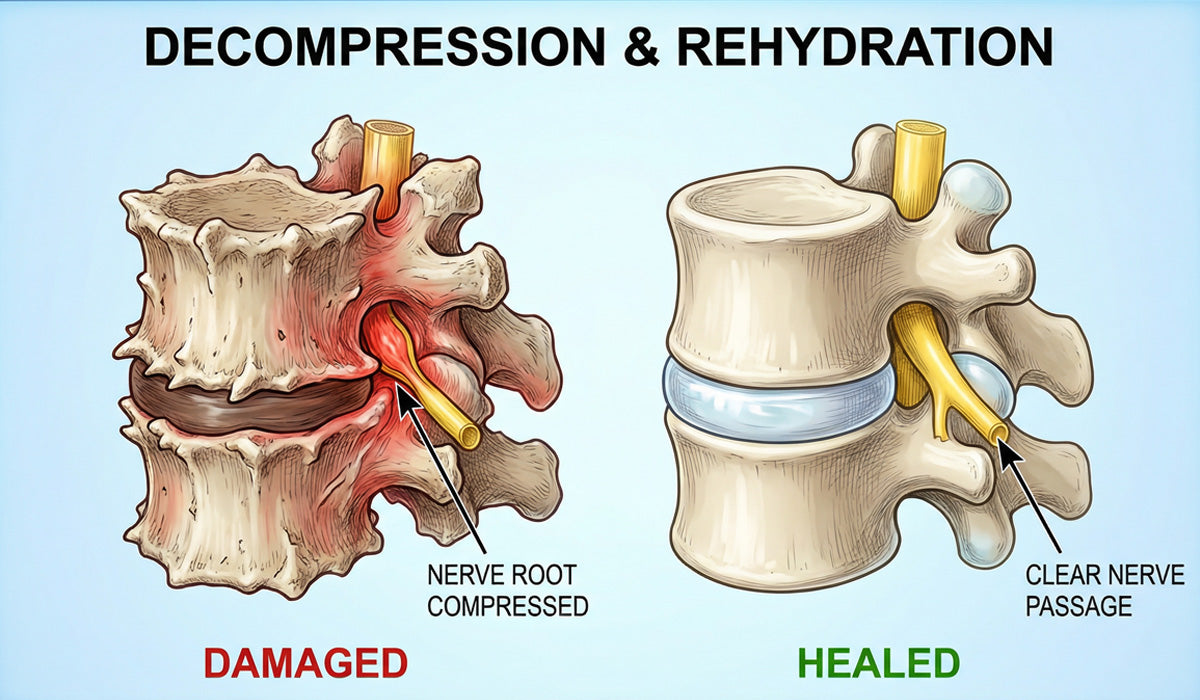
When your brain senses that a spinal nerve is being pinched, it triggers an emergency reflex known as "muscle guarding."
To prevent your spine from shifting and injuring the nerve, your brain orders the surrounding neck and shoulder muscles to clamp down into a continuous, rock-hard cramp. It acts like an internal cast.
"That protective cramp is the chronic stiffness you feel every day," Dr. Brown explains. "When a therapist rubs those muscles or applies heat, they temporarily loosen the protective shield. But because your natural 26-degree curve is still flattened and the disc is still compressed against the nerve, your brain immediately clamps those muscles right back down. You are silencing the smoke alarm while the fire keeps burning."
"Most clinics charge $100 to $150 per session to provide temporary surface relief. But unless you physically decompress the cervical spine at the correct angle, the disc stays flattened and the nerve stays trapped."- Dr. Alexander Brown, MD
Why Clinical Decompression Works (And Why The $3,000 Cost Keeps Patients Trapped)
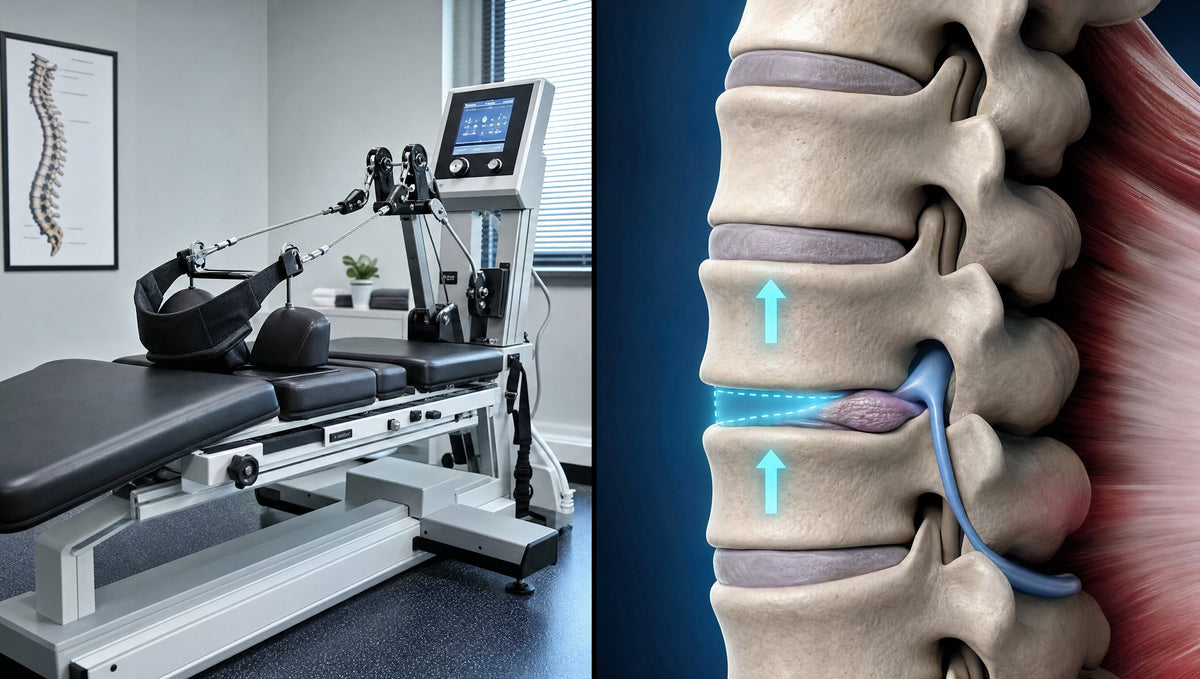
In specialized spine clinics, physicians do not rely on surface massage. They use high-end mechanical traction tables designed to lift the vertebrae apart at a specific 26-degree angle, taking the pressure off the compressed discs so the pinched nerves can breathe.
Once the nerve is freed, the brain turns off the emergency alarm, and the guarding muscles finally release on their own.
The clinical science is undeniable. But for ordinary working Americans, clinical traction has two fatal flaws: frequency and cost.
A standard clinical treatment plan requires two to three visits every week for six to eight weeks. At $100 to $150 per session, patients are routinely billed $2,500 to $3,000 out of pocket. Worse still, receiving a 20-minute decompression session on Tuesday does nothing to protect your spine when you spend 40 hours hunched over a laptop the rest of the week.
The Medical Breakthrough: Packaging Clinical Decompression Into 15 Daily Minutes At Home
Frustrated by watching patients spend thousands on temporary in-office visits, Dr. Alexander Brown partnered with a team of biomedical engineers with a single mission: engineer an affordable, medical-grade device that delivers the complete clinical decompression protocol right at home.
After two years of development and more than $178,000 in laboratory biomechanical testing, they introduced the Hugterra Massager.
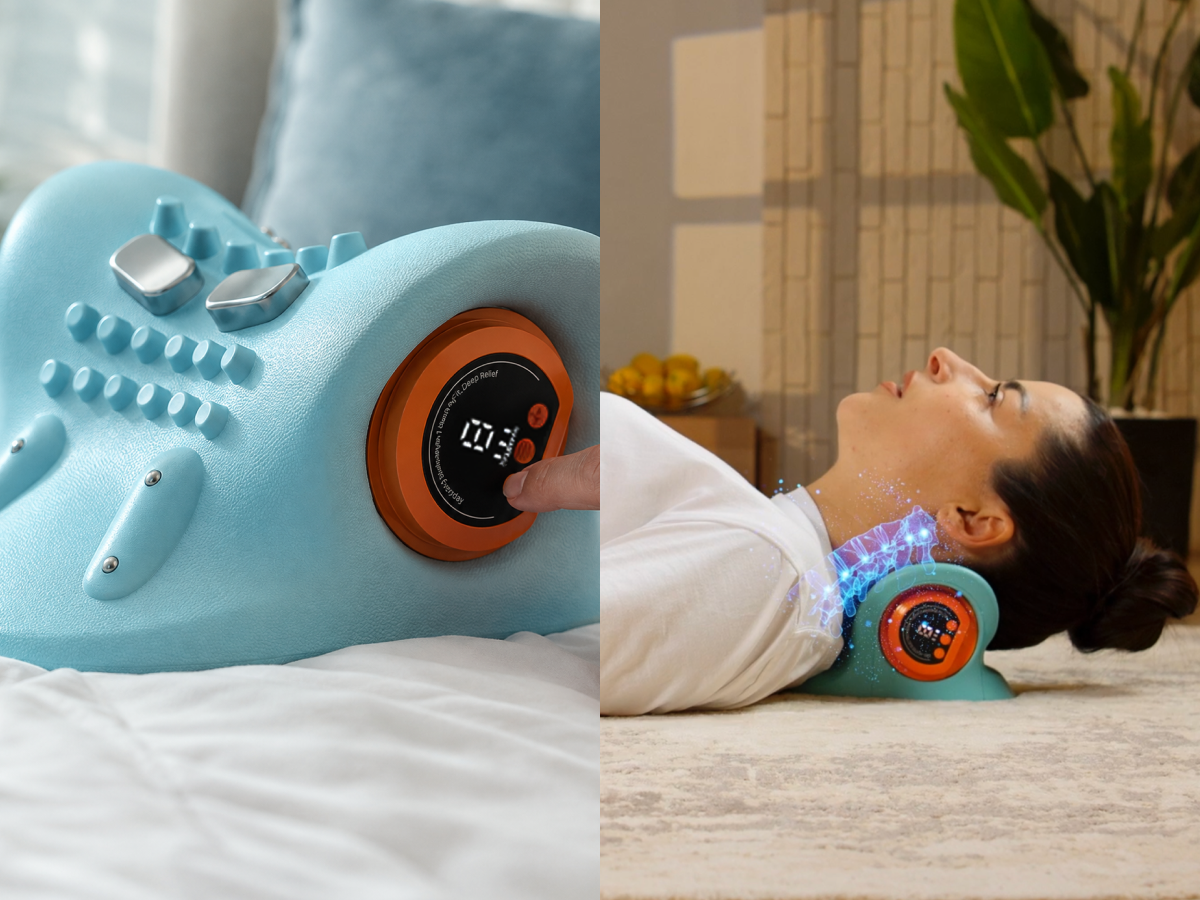
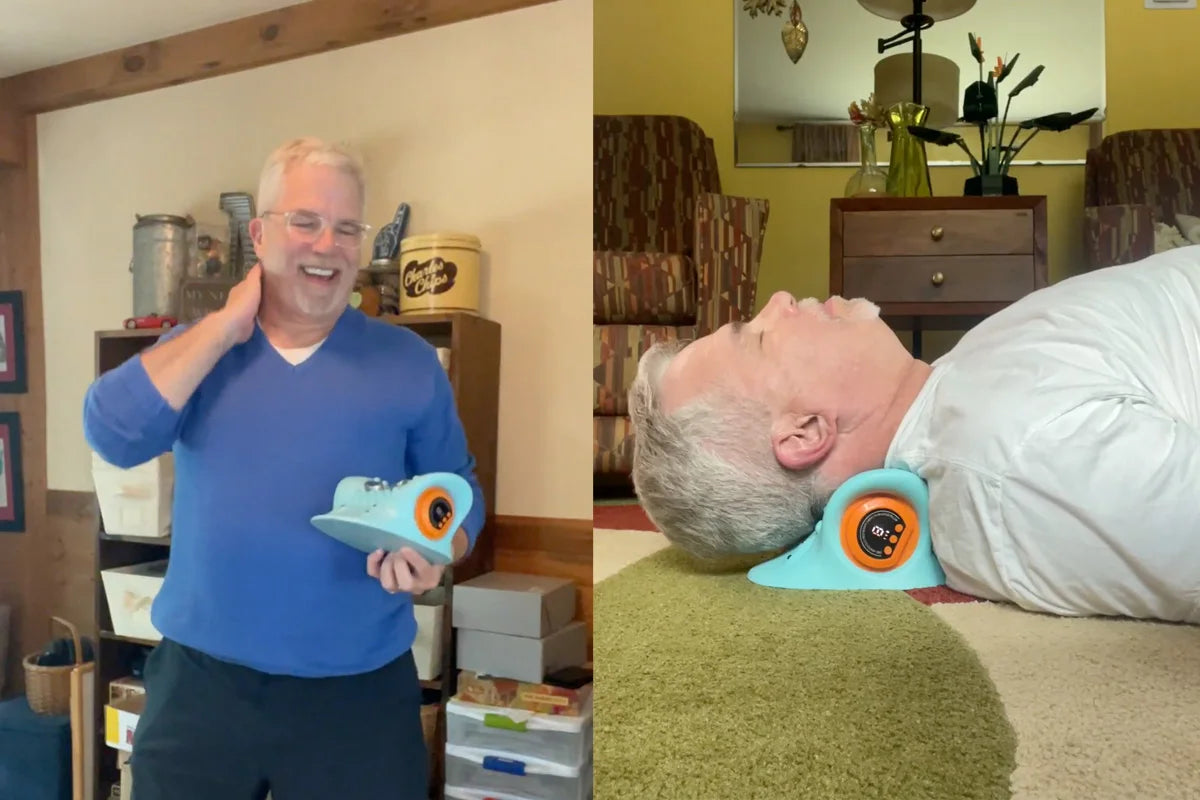
Instead of a bulky $15,000 clinic table or an awkward handheld massage gun, Hugterra is an ergonomic cervical decompression device you simply lie back on for fifteen minutes.
While you rest, Hugterra combines four clinical therapies into a single 15-minute session:
1. 26-Degree Cervical Decompression
Hugterra lifts your neck at the exact clinical 26-degree angle required to restore your spine's natural curve. It gently separates the vertebrae, expanding flattened disc spaces and freeing trapped cervical nerves.
2. Targeted EMS Pulses to Pump Fresh Blood and Oxygen
When neck muscles stay clenched in a protective cramp, they squeeze down on local blood vessels like a kinked garden hose. Hugterra uses gentle Electrical Muscle Stimulation (EMS) micro-pulses that contract and release the deep neck muscles like miniature pumps, opening circulation and pumping fresh oxygenated blood and natural healing nutrients back into the starved tissue.
3. Targeted Soothing Heat to Flush Inflammation
Penetrating therapeutic warmth dilates constricted blood vessels in the upper spine, accelerating circulation to flush out the acidic inflammatory waste that causes chronic morning stiffness.
4. Deep Rhythmic Massage Nodes
Automated therapy nodes work directly into the rock-hard muscles at the base of the skull, releasing the locked-in spasms so your entire neck and upper back can finally let go.
Documented In 37 Chiropractic Clinics Across 487 Patients
To evaluate the device outside the laboratory, Dr. Brown's team conducted a comprehensive multi-center clinical study across 37 independent chiropractic and physical therapy clinics throughout the United States.
A total of 487 patients dealing with chronic neck stiffness, compressed discs, and radiating nerve pain tested the Hugterra Massager daily for two weeks.
"I spent $2,800 on physical therapy and chiropractic packages. Hugterra did more for my neck in two weeks than six months of appointments."
"I work twelve-hour days during tax season. For four years, I dealt with a grinding, burning knot between my shoulder blades and a neck so stiff I had to turn my whole torso to check traffic. My insurance covered part of physical therapy, but I still paid nearly $2,800 out of pocket for traction and adjustments.
The clinic sessions helped while I was in the room, but by Wednesday morning my neck was locked up again. When I tried Hugterra, lying on it for fifteen minutes before bed felt completely different from a regular massager. You can literally feel your neck vertebrae being gently pulled apart and the blood rushing back into the muscles. Within ten days, the burning ache between my shoulder blades was gone. I have not paid for a clinic visit in over eight months."
How To Try Hugterra 100% Risk-Free for 60 Days
A standard six-week clinical decompression treatment plan easily runs $2,500 to $3,000 out of pocket. Most working people simply do not have three thousand dollars to drop on clinic visits every time their neck locks up.
The Hugterra Massager regularly retails for $300, already a fraction of the cost of a single round of physical therapy.
Right now, Hugterra is available directly to the public at a special 53% discount, bringing the price down from $300 to just $139.
That makes Hugterra more than twenty times cheaper than a single clinic treatment plan, for a medical-grade device you own and can use every day at home.
Every order placed through the official website today also includes a Free $64 Cervical Relief Kit:
- ✓Free Headache Relief Patches ($25 Value):Fast-acting transdermal patches to soothe temple throbbing.
- ✓Free Herbal Neck Patches ($20 Value):Targeted herbal patches to melt morning stiffness.
- ✓Free 14-Day Cervical Rehabilitation Guide ($19 Value):Daily expert exercises to permanently protect your spinal posture.

Claim Your Hugterra Massager + Free $64 Clinical Relief Kit
🛡️ The 60-Day "Pain-Free Neck" Money-Back Guarantee
Dr. Brown and the Hugterra team stand behind their clinical outcomes with a completely risk-free trial: Lie back on the Hugterra Massager for fifteen minutes a day in your own bed. If your neck does not feel lighter, looser, and completely pain-free within sixty days, simply return the device for a prompt, no-questions-asked refund.